
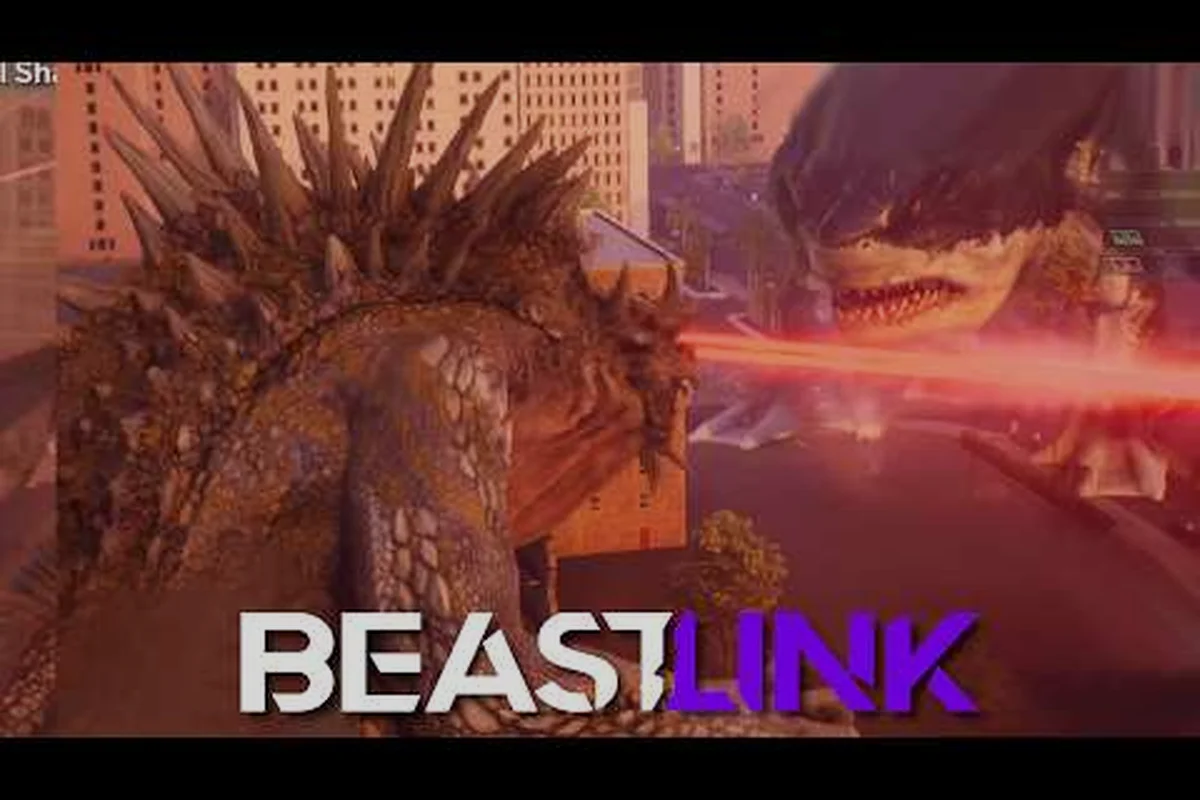
BeastLink beast mode is the core power fantasy that separates this multiplayer Kaiju experience from every other shooter on the market. The moment you spend serum to Link with a dormant Beast, you stop being a soldier and become the catastrophe — and that transition changes everything about how you approach the match. Understanding how this mode works, when to trigger it, and what the win conditions demand will determine whether you dominate the city or get hunted down by the human counter-force.
The official BeastLink Steam page describes the Link system as the heart of the experience: players earn serum during combat, then spend it to connect with colossal creatures that have unique abilities. This isn't a simple ultimate ability on a cooldown — it's a full role reversal that can swing a match in seconds. Whether you're playing the PvE-focused Convergence mode or the competitive Battle Arena, knowing how to maximize your time as a Kaiju is the single fastest way to improve your win rate. Let's break down everything you need to know about BeastLink beast mode, from the serum economy to advanced destruction tactics.
The Core BeastLink Beast Mode Mechanics: From Soldier to Kaiju
BeastLink beast mode activates when you accumulate enough serum during a match and choose to spend it at a dormant Beast location. According to the official BeastLink website, the game is built around humans, vehicles, and colossal Beasts colliding in fully destructible cities — and the Beast phase is where the power fantasy reaches its peak. When you Link, you abandon your human character and take direct control of a Kaiju with a distinct moveset, health pool, and ability kit.
The transition isn't instant, and that vulnerability window matters. Here's what happens step by step:
-
Serum accumulation: You earn serum by completing objectives, dealing damage, and supporting your squad during the human phase.
-
Dormant Beast locations: Beasts spawn at fixed points on the map, and you need to physically reach them while carrying enough serum.
-
The Link animation: A channeling sequence plays out, during which you're vulnerable to enemy fire. Interrupting a Link is a valid counter-strategy.
-
Beast control: Once linked, you control the Kaiju until its health is depleted or the match timer expires.
-
Return to human form: When the Beast falls, you respawn as a soldier and restart the serum cycle.
The Link system rewards aggressive play because serum generation scales with combat participation. Passive players who hide on rooftops will rarely accumulate enough to transform, while players who push objectives and engage vehicles will find themselves transforming multiple times per match. This creates a natural risk-reward loop that keeps the human phase interesting even when you're not the one piloting a Kaiju.
Understanding the Serum Economy in BeastLink Beast Mode
Serum is the lifeblood of BeastLink beast mode, and the economy around it determines how often you can transform. Based on community testing and official descriptions, serum is earned through a combination of objective captures, enemy takedowns, and vehicle destruction. The exact numbers may shift with balance patches, but the fundamental loop remains consistent.
| Serum Source | Relative Value | Risk Level | Notes |
|---|---|---|---|
| Objective captures | High | Medium | Requires map control and squad coordination |
| Infantry eliminations | Low-Medium | Low | Consistent but slow accumulation |
| Vehicle destruction | High | High | Vehicles are heavily armored and well-armed |
| Beast damage contribution | Very High | Very High | Attacking an active Beast is dangerous but lucrative |
| Support actions (heals, revives) | Low | Low | Rewards team play without direct combat |
The key insight is that serum generation rewards multi-tasking. Players who focus exclusively on infantry fights will transform less often than those who mix objective play with vehicle harassment. According to player reports from the early access period, the most efficient serum farmers are those who rotate between capture points and anti-vehicle ambushes, because both activities generate meaningful progress toward the next Link.
BeastLink Convergence: How Beast Mode Works in PvE
BeastLink Convergence is the PvE mode where you and your squad face off against AI-controlled threats while working toward mission objectives. In this mode, BeastLink beast mode takes on a slightly different flavor because you're coordinating against predictable patterns rather than human unpredictability. The official website describes Convergence as the core PvE experience, and it's where most new players will first experience the power of piloting a Kaiju.
The objective flow in Convergence typically follows a rhythm: secure an area, defend it while serum accumulates, then unleash your Beast to break through a fortified position that would be nearly impossible to crack with infantry alone. This creates a co-op mode dynamic where the Beast isn't just a personal power spike — it's a team resource that should be deployed strategically.
Here's what makes Convergence different from PvP when it comes to Beast play:
-
Predictable Beast spawns: AI enemies cluster in known patterns, so you can position your Beast for maximum multi-target damage.
-
Objective synergy: Some objectives are specifically designed to require Beast intervention, like collapsing reinforced bunkers or destroying heavy armor columns.
-
No counter-Beast players: The AI doesn't have a dedicated anti-Kaiju squad, which means your Beast can rampage more freely — though elite units can still threaten you.
-
Team coordination: Since all players are on the same side, you can coordinate who transforms and when, rather than racing to be the first Link.
The BeastLink co-op campaign elements in Convergence reward communication. If your squad staggers their Beast transformations rather than triggering them simultaneously, you maintain constant pressure on the enemy while ensuring someone is always in human form to handle objectives that require infantry interaction. This is a nuance that many new squads miss, and it's why coordinated teams can clear content significantly faster than groups that treat the Beast as a personal ultimate ability.
Convergence Beast Strategies for Squad Play
When you're playing BeastLink Convergence with a squad, the way you deploy your Beast changes based on the mission type. Here's a breakdown of effective approaches:
| Mission Scenario | Best Beast Strategy | Why It Works |
|---|---|---|
| Defensive hold | Save Beast for wave breaks | A fresh Beast can wipe an entire wave that would otherwise overwhelm your position |
| Assault objective | Transform early | Breaking the first defensive line quickly snowballs into easier subsequent objectives |
| Boss encounter | Coordinate with squad | Have one player stay human to handle adds while the Beast focuses the main target |
| Extraction | Use Beast as rearguard | The Beast's size makes it an effective shield while infantry retreats |
The BeastLink PvE experience rewards patience. In Convergence, the AI doesn't punish you for holding your serum until the optimal moment, unlike PvP where delaying your transformation might mean an enemy Beast gets there first. Take advantage of this by communicating with your squad about when the Beast will be deployed, and make sure your human-phase loadout is designed to generate serum quickly during the build-up phase.
BeastLink PvP: Beast Mode in Battle Arena
Battle Arena is where BeastLink beast mode becomes a high-stakes competition between two teams of players, each trying to control the Beast economy while denying the enemy their transformations. The official game modes overview describes this as the competitive PvP sandbox, and it's where the Link system truly shines as a strategic layer on top of traditional shooter combat.
In PvP, the Beast isn't just a power fantasy — it's a win condition that must be earned and protected. The enemy team will actively hunt players who are carrying large amounts of serum, because killing a serum-rich player denies the opposing team their next Beast transformation. This creates a dynamic where BeastLink PvP is as much about resource denial as it is about direct combat.
Key differences in PvP Beast play:
-
Counter-Beast squads: The enemy team will have players equipped with anti-Kaiju weapons, so your Beast needs to be mobile and aware of its surroundings.
-
Beast vs. Beast: When both teams have active Beasts, the fight becomes a Kaiju duel with infantry support from both sides.
-
Objective pressure: In objective-based PvP modes, the Beast is often the only unit that can contest certain points effectively.
-
Timing matters: Transforming at the wrong moment can leave your team without a Beast during a critical objective push.
The BeastLink PvP meta, according to community reports from early access, favors Beasts that can close distance quickly and apply pressure to objective points. A Beast that sits at range and tries to snipe with its abilities is less valuable than one that charges into contested zones and forces the enemy team to respond. This is because the Beast's primary value in PvP is area denial and disruption — you're not trying to wipe the entire enemy team, you're trying to break their formation and create openings for your infantry.
Anti-Beast Play: What Human Players Can Do
If you're on the receiving end of an enemy Beast, understanding the counter-play is essential. The BeastLink mode doesn't make the Beast invincible — it makes it powerful, but killable. Here's what works:
| Anti-Beast Tactic | Effectiveness | Risk to User |
|---|---|---|
| Focused fire with anti-Kaiju weapons | High | Requires coordination and exposes you to Beast abilities |
| Vehicle hit-and-run attacks | Medium-High | Vehicles are fast but can be destroyed quickly |
| Building collapse damage | Medium | Can damage the Beast but requires precise positioning |
| Serum denial (kill carriers) | High | Prevents the Beast from spawning in the first place |
| Beast vs. Beast response | Very High | Requires your team to have serum ready |
The BeastLink multiplayer experience is at its best when both teams understand these dynamics. A match where one team transforms and immediately dominates isn't as engaging as a back-and-forth where each Beast appearance is met with a coordinated response. According to player feedback, the most memorable matches are those where the Beast economy swings multiple times, with each team getting their chance to play as the monster.
BeastLink 1.0 Modes: What's Coming to Beast Mode
The early access version of BeastLink includes the core modes we've discussed, but the developers have confirmed that BeastLink 1.0 modes will expand significantly. Based on the official roadmap and community reporting, the full release will include additional ways to experience BeastLink beast mode, including a story campaign and potentially ranked competitive play.
The confirmed and strongly rumored additions include:
-
Story missions: The official website mentions uncovering the truth behind the Beast outbreak, suggesting a narrative-driven campaign that will contextualize the Beast mode within a larger story.
-
Ranked mode: Competitive players are expecting a ranked ladder that will give BeastLink PvP a more structured competitive environment.
-
Expanded Beast roster: The 1.0 release is expected to include more Kaiju options, each with unique abilities that will change how Beast mode plays.
-
New maps: Additional destructible city environments will provide fresh tactical considerations for Beast players.
The BeastLink co-op campaign potential is particularly exciting because it suggests a more structured PvE experience than the current Convergence mode. If the story missions are designed around specific Beast encounters, we could see scenarios where the Beast is the protagonist rather than just a power-up — a significant shift in how the mode is framed. For players who thrive on chaos and adaptability, this setup feels right at home in the Beastlink Game Modes, where shifting objectives demand the same quick pivots.
How to Prepare for BeastLink 1.0 Modes
If you're planning to be ready for the full release, here's what you should focus on during early access:
-
Master the serum economy: The fundamentals of earning and spending serum will almost certainly carry over to new modes, so building good habits now pays off later.
-
Learn multiple Beasts: If the roster expands, having experience with different Beast types will make you more adaptable.
-
Practice squad coordination: The co-op campaign will likely require even more teamwork than Convergence, so building a regular squad now is valuable.
-
Stay updated on patch notes: The developers have been actively tuning the Beast balance, so keeping current with changes is important.
The BeastLink 1.0 modes will build on the foundation established in early access, which means the skills you develop now will transfer. Players who invest time in understanding the nuances of BeastLink beast mode — the timing, the positioning, the ability combos — will be ahead of the curve when the full release arrives.
Advanced BeastLink Beast Mode Tactics: Maximizing Your Kaiju Time
Once you understand the basics of BeastLink beast mode, the next step is optimizing every second you spend as a Kaiju. The difference between a good Beast player and a great one often comes down to how efficiently they use their abilities and positioning during the transformation window.
Here are the advanced tactics that experienced players report using:
-
Ability rotation planning: Each Beast has a unique kit, and knowing the optimal ability order can dramatically increase your damage output. Don't just spam abilities on cooldown — think about which combinations create the most impact.
-
Building collapse awareness: The SuperDestruction system means you can use buildings as weapons. Collapsing a structure on an enemy squad can wipe them instantly, but it also changes the map geometry for your team.
-
Health management: Your Beast health doesn't regenerate, so every hit you take matters. Use cover and mobility to avoid unnecessary damage, especially early in your transformation.
-
Objective prioritization: In objective-based modes, the Beast should be focused on objectives rather than chasing kills. A Beast that secures the point is more valuable than one that racks up eliminations.
The BeastLink beast mode advanced play revolves around understanding that you're not just a big damage dealer — you're a strategic asset that can break stalemates, secure objectives, and create space for your team. The best Beast players think like commanders, not just brawlers.
Beast Ability Synergies and Combos
Different Beasts have different ability kits, and understanding how they synergize is key to maximizing your impact. Based on community testing and official descriptions, here's how the ability structure generally works:
| Ability Type | Typical Effect | Best Used For |
|---|---|---|
| Primary attack | Basic damage dealing | Consistent pressure on infantry and vehicles |
| Charged attack | Heavy damage with wind-up | Breaking through fortified positions |
| Area denial | Zone control with lingering effects | Forcing enemies out of strong positions |
| Mobility skill | Dash, leap, or burrow | Closing distance or escaping focus fire |
| Ultimate ability | High-impact, long cooldown | Turning the tide of a critical fight |
The BeastLink PvE and PvP modes reward different ability priorities. In PvE, area denial and sustained damage are often more valuable because AI enemies cluster predictably. In PvP, mobility and burst damage become more important because human players will try to escape your area denial and punish your wind-up animations.
Frequently Asked Questions
What is BeastLink beast mode?
BeastLink beast mode is the gameplay phase where you spend serum to Link with a dormant Kaiju and take direct control of a colossal creature. During this phase, you use the Beast's unique abilities to destroy buildings, fight vehicles, and contest objectives. The mode activates when you reach a dormant Beast location with enough serum.
How do I get serum for BeastLink beast mode?
You earn serum by completing objectives, eliminating enemies, destroying vehicles, and contributing to Beast damage. The exact amounts vary by action, with objective captures and vehicle destruction providing the highest yields. Passive play generates minimal serum, so aggressive participation is required to transform regularly.
Is BeastLink beast mode available in co-op?
Yes, BeastLink Convergence is the co-op PvE mode where you and your squad can coordinate Beast transformations. The co-op campaign elements in the full release will expand this further. Squad coordination is essential because staggering Beast deployments maintains constant pressure while ensuring someone remains in human form for infantry objectives.
What are the differences between BeastLink PvP and PvE Beast play?
In BeastLink PvP, you face counter-Beast squads and potential Beast-versus-Beast duels, making positioning and timing critical. In PvE Convergence, AI patterns are predictable, allowing for more aggressive play. The serum economy also differs, with PvP rewarding resource denial while PvE rewards consistent objective completion.
What new modes are coming in BeastLink 1.0?
BeastLink 1.0 adds story missions, ranked Battle Arena, new destructible maps, and an expanded Beast roster. The co-op Convergence mode stands out, letting you pilot a Beast as protagonist in scenarios where transformation isn’t a power-up but a tactical resource to break stalemates and secure objectives.