
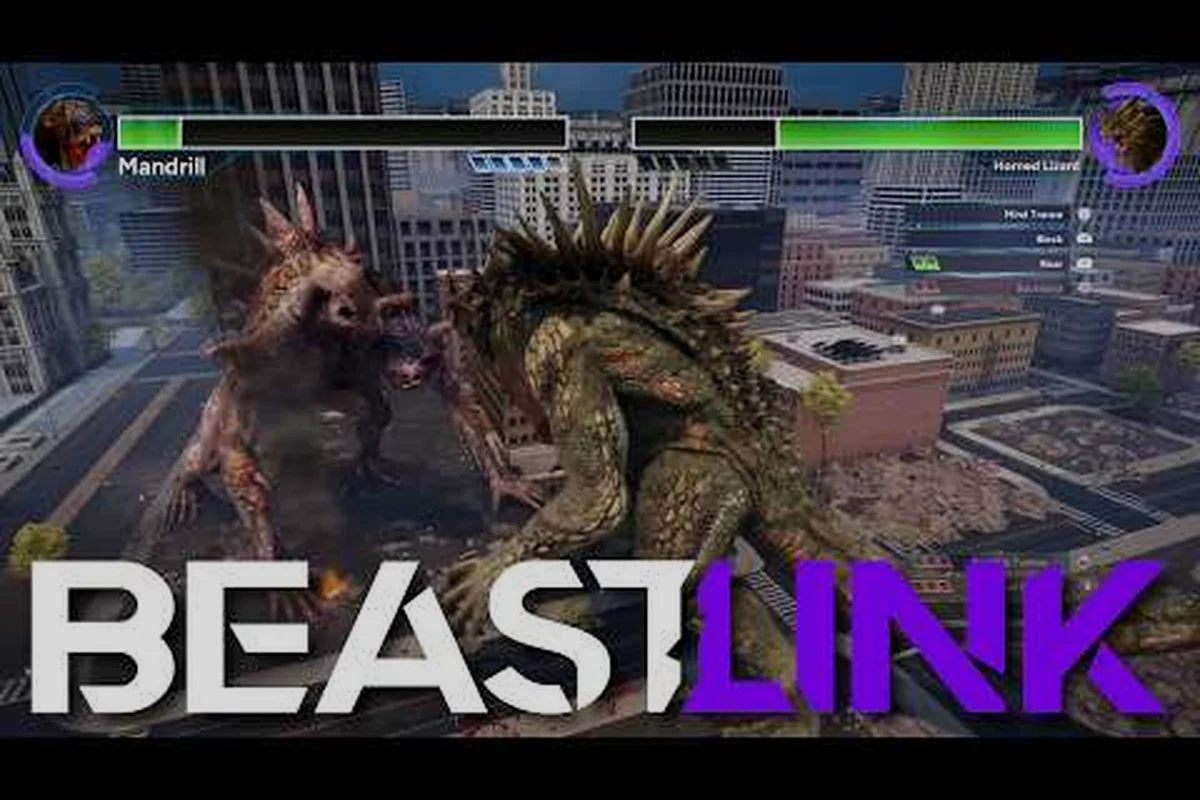
BeastLink drops you into a fully destructible city where humans, vehicles, and colossal Kaiju collide in matches built for up to 32 players. This BeastLink beginner guide covers the three playable roles, the serum economy that drives every match, and exactly what to prioritize during your first two hours of Early Access on August 18. Getting these fundamentals right matters because the game punishes indecision — players who understand the Link system and their role from the start consistently outscore those who wander aimlessly. Discover how to earn serum, when to spend it, and why positioning decides more matches than raw damage output. According to BeastLink on Steam, the game’s core loop revolves around linking creatures to amplify their stats, with damage scaling derived directly from chain length and elemental synergy.
Understanding the Core Roles in BeastLink
Before you queue into your first match, you need to understand that BeastLink splits its roster into three distinct playstyles, each with its own objectives and survival rules. The official Steam page describes the core fantasy as spending serum to connect with dormant Kaiju Beasts, but that only scratches the surface — how you earn that serum depends entirely on which role you choose. Your first two hours should be spent sampling all three roles so you can identify which one matches your instincts, because committing to a role you dislike will make the learning curve feel twice as steep.
The Human Role: Scavenging and Survival
Playing as a human is the most accessible entry point in this BeastLink gameplay guide, primarily because you control a single character rather than a screen-filling monster. Humans spawn on the ground level of the destructible city and must scavenge buildings for serum canisters while avoiding both enemy players and rampaging Beasts. Your mobility is your greatest asset — you can enter buildings, climb staircases, and use narrow alleyways that Beasts physically cannot access. The official website emphasizes that humans, vehicles, and colossal Beasts collide in these maps, which means you will constantly need to read the battlefield and reposition.
Serum collection is your primary job as a human, and you should prioritize it over combat in the early game. Each canister you collect adds to your personal reserve, which you can either bank for your own Link attempt or deposit at extraction points for the team. The risk-reward loop here is straightforward: stay hidden and collect safely, or push into contested zones where serum density is higher but enemy humans are likely camping. According to community reports from the closed beta, players who survived the first five minutes as humans typically banked enough serum to fund a Beast Link later in the match.
The Vehicle Role: Firepower and Mobility
Vehicles serve as the middle ground between fragile humans and unstoppable Beasts, offering mounted weaponry and superior speed across the city streets. You can find tanks, APCs, and scout cars scattered across the map, each with different armor values and weapon loadouts. The trade-off is that vehicles are loud, visible, and attract attention from both enemy squads and Beasts looking for easy destruction points. If you want to learn how to play BeastLink effectively, mastering vehicle combat teaches you positioning, aim, and when to disengage — skills that transfer directly to the other roles.
Vehicle maintenance becomes critical because taking fire degrades your armor and eventually disables your vehicle entirely. When your vehicle is disabled, you are forced to exit and fight as a human, which means you lose your mobility advantage at the worst possible moment. Experienced players recommend keeping your vehicle at medium range during fights, using buildings as cover while your turret does the work. The SuperDestruction system mentioned on the official site means buildings collapse dynamically, so never assume a piece of cover will stay standing — always have an escape route planned.
The Beast Role: The Power Fantasy
The Beast role is what most players queue up for, and it delivers exactly what the trailers promise: control of a colossal Kaiju with unique abilities that can reduce entire city blocks to dust. However, becoming a Beast requires spending serum at a Link point, and the amount required scales with the Beast's power level. The official Steam page describes this as the core power fantasy, and it absolutely is — but it is also the role with the highest skill ceiling because you become a priority target for every human and vehicle on the map.
Beast abilities vary by creature, with some excelling at ranged destruction while others are built for close-quarters melee. Your health pool is massive compared to humans, but it depletes steadily as you take fire from coordinated squads, so you cannot simply stand in the open and trade blows. The best Beast players use the destructible environment to their advantage, collapsing buildings onto enemy positions and using the resulting dust clouds to break line of sight. For a deeper breakdown of which Beast suits your playstyle, check out our BeastLink beast playstyles guide that ranks each creature's strengths and weaknesses.
The Serum Economy: How to Earn and Spend
Serum is the lifeblood of every BeastLink match, and understanding its flow is the difference between a match where you feel powerful and one where you watch from the sidelines. You earn serum by collecting canisters scattered across the city, destroying enemy vehicles, and completing objective-based events that spawn periodically. The economy is designed so that passive play never pays — you must actively engage with the map to build your reserves. This BeastLink tips and tricks section breaks down the exact earning rates and spending priorities.
| Serum Source | Average Yield | Risk Level | Time Investment |
|---|---|---|---|
| Street Canisters | 10-20 per canister | Low | 10-20 seconds |
| Building Cache | 30-50 per cache | Medium | 30-45 seconds |
| Destroyed Vehicle | 40-60 per vehicle | High | 15-30 seconds |
| Event Objective | 100-150 per event | Very High | 2-3 minutes |
| Beast Kill Assist | 50-80 per assist | Extreme | Variable |
The table above shows that event objectives offer the highest serum yield, but they also attract the entire lobby, making them deathtraps for unprepared players. In your first two hours, focus on street canisters and building caches while you learn the map layout, then graduate to vehicle hunting once you understand common traffic patterns. The serum economy rewards consistency over heroics — banking 200 serum across ten minutes of safe collection is better than dying three times chasing a single high-value cache.
When to Spend Serum on a Beast Link
The decision to spend your serum on a Beast Link is the most consequential choice in any match, and new players consistently make it too early. Link points are scattered across the map, and each one can only be used once per match, so you need to choose your activation moment carefully. If you Link during the early game, you become a Beast while most players are still humans — which sounds powerful, but it also means you have fewer structures to hide behind and more open space to be targeted from.
Optimal Link timing typically falls in the mid-game, roughly eight to twelve minutes into a standard match, when the human population has thinned out and vehicles are more common targets. At this point, the remaining humans have usually banked significant serum, which means they are also close to their own Link attempts — so you want to strike before they do. Community testing suggests that waiting too long is equally dangerous, because a lobby full of Beasts is chaos where individual survival becomes luck-based. The sweet spot is when you have enough serum to Link, but you have also scouted the map and know where the next event objective will spawn.
Your First Two Hours: A Step-by-Step Plan
The first two hours of BeastLink are critical because they set your habits, and habits formed early tend to stick. Rather than jumping into random matches and hoping for the best, follow this structured approach that covers the essentials of how to play BeastLink efficiently. This plan assumes you have completed the tutorial and have a basic grasp of the controls, so it focuses on strategic development rather than button mapping.
| Time Block | Focus Area | Specific Actions |
|---|---|---|
| 0-30 minutes | Role Sampling | Play 2 matches as human, 1 as vehicle, 1 as Beast |
| 30-60 minutes | Map Knowledge | Learn extraction points, Link locations, high-traffic zones |
| 60-90 minutes | Serum Efficiency | Practice collection routes, test event objective timing |
| 90-120 minutes | Combat Fundamentals | Focus on one role, learn its matchups and counters |
During the first block, resist the urge to specialize — the goal is exposure, not mastery. Each role teaches you different aspects of the game's systems, and understanding all three makes you a better teammate regardless of which role you eventually main. The second block is about map awareness, which veteran players consistently rank as the most important skill in the game. Knowing where extraction points sit relative to Link locations lets you plan routes that maximize serum collection while minimizing exposure.
Common Mistakes New Players Make
Every BeastLink beginner guide worth reading includes a section on mistakes, because the game's complexity means there are many ways to throw a match. The most common error is hoarding serum without a plan — players collect canisters all match, then die with 300 serum that could have funded a Beast Link or supported a teammate's. Another frequent mistake is treating the game like a traditional shooter, where kills are the primary objective. In BeastLink, kills matter only insofar as they deny the enemy team serum and map control.
Overextending as a Beast is the third major mistake, and it is the most frustrating to watch. New Beast players charge into the densest part of the city, get surrounded by vehicles, and die within thirty seconds of Linking. The correct approach is to use your Beast's abilities to control space rather than chase kills — collapse buildings to block routes, use your ranged attack to soften targets, and only commit to melee when you have a numbers advantage. For more advanced tactical breakdowns, our BeastLink match guide covers positioning and rotation strategies in detail.
Essential Tips and Tricks for Faster Progression
Once you have the basics down, these BeastLink tips and tricks will accelerate your improvement curve significantly. The game rewards players who think in terms of information advantage — knowing where enemies are, where serum is spawning, and when events will trigger gives you more options than raw mechanical skill. Sound is a major factor here, because Beasts are loud and their footsteps shake the ground, giving you early warning of their approach even when you cannot see them.
-
Use the destructible environment to your advantage — collapsing a building on an enemy vehicle deals massive damage and creates cover for your advance.
-
Always have an escape route planned — the city changes shape as structures fall, so never commit to a position that can be cut off by a collapsing building.
-
Communicate serum locations with your team — the player who calls out a cache location is as valuable as the player who collects it.
-
Learn the event timers — events spawn on a predictable schedule, and being in position before they trigger gives you a massive head start.
-
Prioritize survival over kills in the early game — dying early costs you collection time and gives the enemy team a serum advantage.
The vehicle meta deserves special attention because vehicles are the most underrated role in the game. A skilled vehicle player can harass Beasts from range, deny human collection routes, and provide mobile fire support for teammates. The key is to treat your vehicle as a resource, not a disposable asset — retreat to repair when damaged, and never push into a position where you cannot reverse out of. Solo players often overlook vehicles because they require a driver and gunner to be fully effective, but even solo, a well-positioned vehicle can control an entire street.
Building a Loadout Strategy
While BeastLink does not have traditional loadouts, your choices about which role to play and when to Link function as a de facto build strategy. Role selection should be based on your team composition — if your team has two players collecting serum, consider playing vehicle to protect them from enemy harassment. If your team has no dedicated collector, that might be your job. The game rewards flexible players who can read the lobby and fill gaps rather than locking into a single role.
| Team Composition | Recommended Role | Primary Objective |
|---|---|---|
| 2 Collectors, 1 Vehicle | Human Collector | Bank serum for early Link |
| 1 Collector, 2 Vehicles | Vehicle Gunner | Protect collector, harass enemies |
| 3 Collectors | Beast Hunter | Disrupt enemy collection routes |
| No Communication | Human Scout | Gather intel, call out positions |
This table shows how your role should shift based on what your team needs, which is a concept many new players struggle with. The best approach for solo queue is to start as a human collector, because that role is self-sufficient and does not require coordination. Once you have banked enough serum for a Link, reassess the match state — if your team is winning, consider holding your serum to deny the enemy a Beast; if you are losing, spending it on a Beast might be the only way to swing momentum.
Advanced Considerations for Long-Term Improvement
As you move past your first few sessions, you will notice that the game's depth extends far beyond the basic mechanics covered in this BeastLink gameplay guide. The Link system has hidden nuances, including the fact that different Link points may offer different Beast options depending on the match state. Community reports suggest that some Link points are tied to specific Beasts, so learning which points offer which creatures gives you strategic control over your Beast choice.
Match flow awareness is the next skill to develop — recognizing when the lobby is transitioning from the collection phase to the Beast phase lets you position yourself advantageously. Early in the match, the map is full of humans and serum is abundant; mid-match, the first Beasts appear and the ground game becomes more dangerous; late match, the map is often reduced to rubble and the surviving players are fighting over scraps. Each phase requires different tactics, and players who recognize the transitions early gain a significant edge.
For players who want to specialize in the Beast role, our BeastLink how to play as Beast guide offers advanced techniques for piloting vehicles and maximizing your destruction potential. The solo experience has its own challenges, and our BeastLink solo guide covers how to win matches without a coordinated team. These resources complement this beginner guide by providing depth in specific areas rather than repeating the fundamentals.
Frequently Asked Questions
What is the best role for a complete beginner in BeastLink?
The human collector role is the best starting point because it teaches you map awareness, serum management, and survival instincts without the pressure of piloting a vehicle or controlling a Beast. You can learn at your own pace while contributing to your team's economy, and the skills you develop transfer directly to the other roles.
How much serum do I need to Link with a Beast?
The serum cost varies by Beast, but most basic Beasts require between 150 and 250 serum to Link. Stronger Beasts with more destructive abilities cost more, sometimes exceeding 400 serum. Check the Link point interface before committing, because some points only offer specific Beasts and you may need to relocate if you want a particular creature.
Can I play BeastLink solo without a coordinated team?
Yes, BeastLink is fully playable solo, and the matchmaking system places you with random teammates. Solo play is actually a great way to learn because you are forced to be self-sufficient and read the match state independently. Focus on the human collector role initially, then branch out once you understand the flow of matches.
When should I spend my serum on a Beast Link?
The optimal timing is mid-match, roughly eight to twelve minutes in, when the human population has thinned and vehicles are more common. Linking too early makes you a target with no cover, while linking too late means you enter a lobby already full of Beasts. Watch the kill feed and event timers to gauge the right moment.
What are the most important settings or controls to customize?
Sensitivity and key bindings matter most—tracking Beasts needs fast flicks, but vehicle turrets demand steadier aim. Rebinding comms to mouse buttons lets you call serums mid-chase. Test in the tutorial, then adjust per match; lower zoom sensitivity if you over-rotate on cliffs.